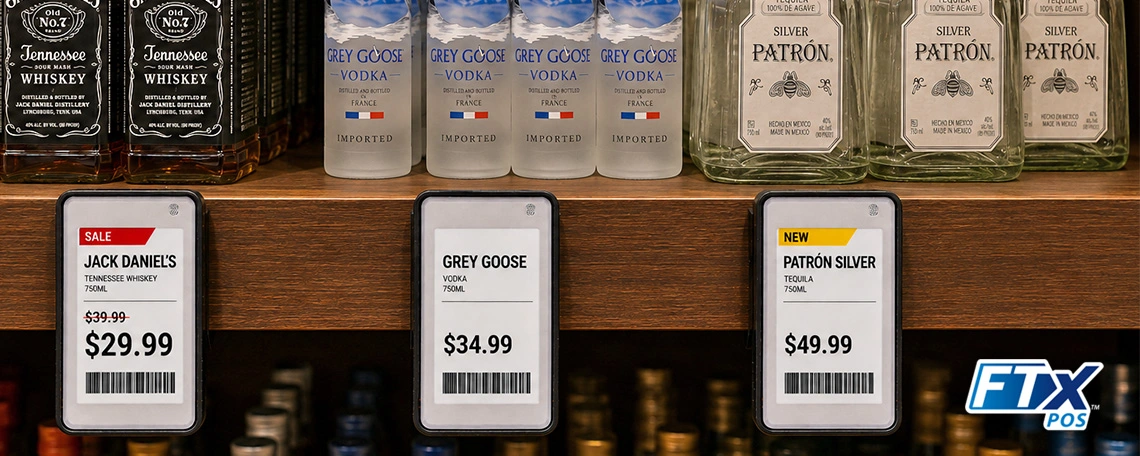
7 Best Digital Price Tag Providers for Retail Stores in 2026
Danielle Dixon | 12 Min Read

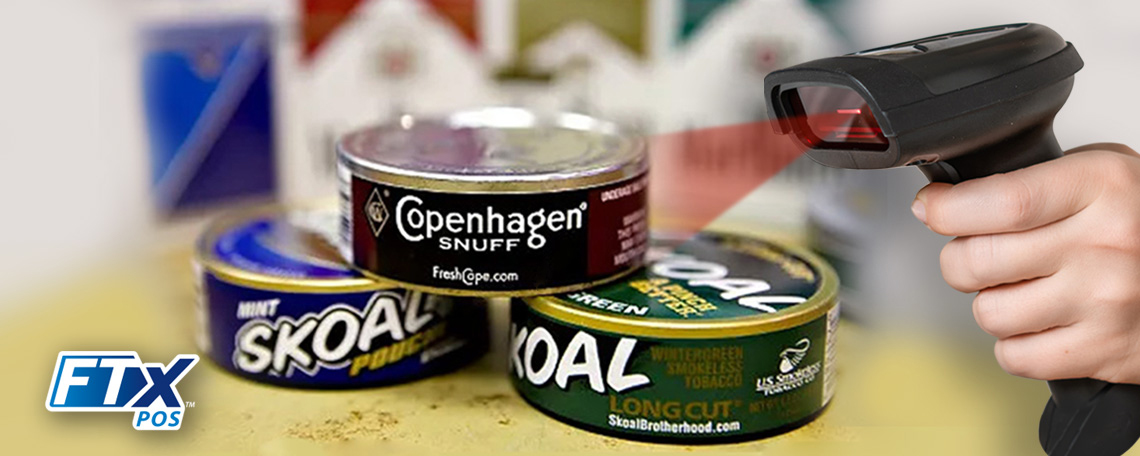
What’s tobacco scan data? And how can convenience store owners and retailers choose the best scan data incentive program?
For convenience store owners, tobacco is easily one of the most profitable and in-demand products on the shelf, and while there’s a profit to be made from tobacco sales alone, there is also profit to be found in another field: customer data acquisition.
By sharing data with tobacco companies, convenience store owners can save big with rebates and sales incentives.
Here’s how scan data incentive programs work:
Sounds like a great opportunity to drive revenue? Ultimately, getting started with a tobacco incentive program requires your store to have strong data collection capabilities (which is generally made possible via POS scan data automation). This guide will show you everything you need to know about tobacco scan data incentive programs, provide guidelines for getting started, and show how a rebate program can help you grow revenue.
Tobacco POS That Pays You Back! FTx POS connects scan data + incentives with
the tools you need: age verification, customization, and payments.
Think of it as a formal, mutually beneficial data exchange. At its core, a scan data incentive program is an agreement where retailers share detailed, item-level sales information with tobacco manufacturers. In return, manufacturers provide financial incentives—like rebates, discounts (often called “buydowns”), and funding for loyalty programs—that help those retailers compete on price and boost profits.
The “scan data” itself is the digital record captured every time a product’s barcode is scanned at your point of sale. It goes beyond a simple sales total to include specifics like:
This granular data is incredibly valuable to tobacco companies. It tells them exactly what is selling, where, when, and at what price point, providing a near real-time view of the market that they can’t get from their own shipments alone.
While all retailers can benefit, these programs are particularly impactful for independent convenience stores, smoke shops, and small retail chains. For these businesses, the incentives earned can be a game-changer, offering the financial leverage to compete on price with big-box retailers and large chain stores, turning data into a direct competitive advantage.
To qualify for discounts, retailers must send weekly reports to tobacco companies, called scan data reports. This data is difficult to compile manually, and in many cases, tobacco companies now require it to be submitted digitally. That’s why automated scan data reporting is a must-have feature in a tobacco store POS.
With scan data automation, these POS reports are prepared and automatically submitted on your store’s behalf to a tobacco company like Altria.
Sharing this data then qualifies you for the buydowns and discounts that big tobacco chains receive. This can be a game-changer for independent tobacco retailers, corner stores, and minimarts, as they can compete on price with larger retailers.
However, in addition to scan data reports, many programs also provide greater incentives for more in-depth data. Therefore, to reach higher tiers, generally you’ll need:
Age Verification – Some programs offer a one-time incentive for using an advanced age verification platform. This would include ID scanners or verification software that meet electronic age and identity verification (EAIV) standards.
Loyalty Programs – Retailers can earn greater incentives for including loyalty IDs in their scan data reports. This will qualify for larger buydowns, and therefore, an integrated loyalty program is a must for tobacco retailers.
Generally, these programs vary in their requirements, and the more data you share, the more savings you can earn. Email marketing and digital data submission may also qualify for further incentives, among others.
Scan data incentive programs are designed to reward retailers for assisting manufacturers with customer data acquisition. Mostly, these rewards tend to take the form of rebates that are awarded for selling specific brands of tobacco; however, there are also a host of other benefits that can come from having the added capital awarded through these programs.
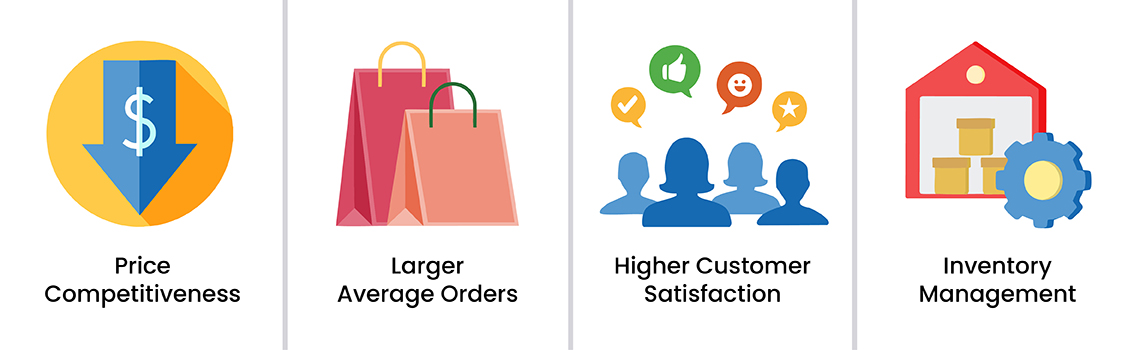
Ultimately, these programs can help businesses increase revenue in four ways:
Price Competitiveness: Passing along scan data incentives to your customers will result in increased customer loyalty and revenue growth. More competitive pricing helps cigarette sellers earn more repeat business and more walk-ins, and it helps increase word-of-mouth mentions.
Larger Average Orders: Customers tend to buy more products when the price point is lower than they expect it to be. In addition, many scan data programs provide multi-item incentives at checkout, which allows customers to reap more savings by buying in volume. These factors can help businesses grow average order values and maximize per-customer revenue each day.
Higher Customer Satisfaction: The tobacco industry is highly competitive, with merchants vying for consumer attention and loyalty. Therefore, reduced prices from scan data savings can help businesses attract new business, please their customer base, and foster customer loyalty.
Inventory Management: These programs also provide businesses with insightful sales data. Smoke shops can use this data to analyze customer behavior and buying patterns. This helps to reduce out-of-stocks and allows businesses to understand when to expect sales spikes or dips. This results in better tobacco and cigar shop inventory management.
In any case, regardless of its usage, the best way to capture customer data is to have an integrated scan-data reporting feature in the best POS systems for smoke shop. The proper recording and reporting software helps you capture and send scan data without hassle.
Scan Data Case Study. Read how Smokers Choice used POS tools to scale a scan data program and increase sales by 400%.
Understanding the mechanics can turn a seemingly complex program into a straightforward, automated revenue stream. Here’s a breakdown of the typical journey from enrollment to reward.
The first step is formal enrollment with a tobacco manufacturer (like Altria or RJ Reynolds) or through a technology partner that facilitates multiple programs. This often involves an application where you provide your store details and agree to the data-sharing terms. Crucially, you must verify that your POS system is capable of producing the specific scan data reports the program requires.
This is where automation begins. With every tobacco product scanned at checkout, your POS system records the foundational data: UPC, sale price, quantity, date, and time. A modern, tobacco-optimized POS does this seamlessly in the background, creating a clean, digital record of every transaction without any extra work from your staff.
Raw sales data isn’t ready to send. In this technical but vital step, the data is “mapped.” This means your POS or a middleware provider translates your internal product codes and formats them into the exact, standardized data fields required by the specific tobacco brand (e.g., matching your store’s stock keeping unit (SKU) for “Marlboro Gold 100s” to Altria’s official product ID). Accurate mapping is essential for the data to be accepted.
Before submission, the compiled data runs through automated validation checks. This process looks for and flags errors like missing UPCs, incorrect pricing, or formatting issues. Catching problems here prevents your submission from being rejected by the manufacturer, ensuring you remain eligible for incentives. A good system will alert you to fixable errors.
The validated scan data report is then electronically submitted to the tobacco manufacturer. This is typically a weekly automated process. The system securely sends the file via a designated portal or protocol on a predetermined schedule. You don’t need to manually export, format, or email files—it happens automatically.
Upon receipt, the manufacturer’s system ingests your data through secure, encrypted channels. This step underscores the importance of working with reputable technology providers who guarantee data security and integrity throughout the transfer, protecting your sensitive sales information.
Manufacturers aggregate data from thousands of retailers to analyze sales performance, market share, and the impact of promotions at a granular level. This intelligence helps them make strategic decisions about production, marketing, and incentive structures. Your data contributes to this macro view.
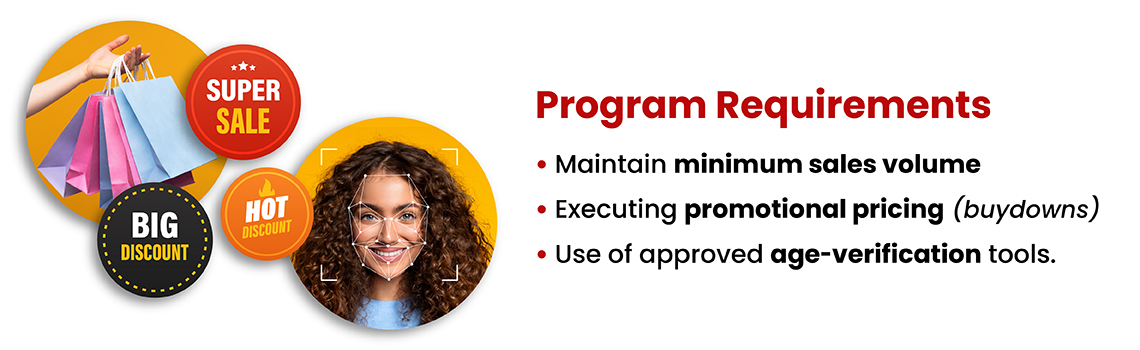
Incentives are usually tied to specific requirements. This isn’t just about submitting data; it’s about what the data shows. Common requirements include maintaining a minimum sales volume of specific brands, executing promotional pricing (buydowns) for a set period, or demonstrating the use of approved age-verification tools. Your compliance with these terms is verified against the data you submitted.
Once compliance is confirmed, the financial incentives are calculated and issued. These typically arrive as direct rebate payments, credits to your account, or as funded discounts for future promotions (buydowns). These funds are the tangible return on your data, which you can reinvest into competitive pricing, store improvements, or your bottom line.
When considering the pros and cons of any POS system with scan data , be sure to keep the following question in mind and think about your business’s day-to-day operations:
Does the program offer automation?
Is the program secure?
How will the provider charge you to use the service?
What is the provider’s experience with scan data reporting?
How long will setup take?
Is the program flexible enough to adjust to the compliance requirements of each state?
Generally, some of the key features to look for in a tobacco incentive program include:
These programs should drive revenue. Therefore, start by looking at the cost of implementing a scan data reporting program. Many POS systems offer scan data and manufacturer loyalty out-of-box, and therefore, you pay a monthly fee to access the entire POS platform. Third-party providers charge monthly fees and may take a percentage of the incentives you earn. Be sure you’re aware of the costs.
Ensure that the scan data program is compatible with your Point of Sale (POS) system and other software tools they use. If you’re using a loyalty program, the scan data system should integrate seamlessly with it, allowing for targeted promotions and offers based on purchase history. Finally, the program should be flexible enough to adapt and scale to accommodate business growth.

Regulators keep a close eye on tobacco sales. The scan data program should help you comply with local, state, and federal regulations, including age verification and tax calculations. Also, given the sensitive nature of sales data, the program should have robust security features to protect against data breaches and unauthorized access.
Ensure the program has a reliable backup and recovery system in case of data loss. Also, you should choose a POS or scan data provider that offers excellent customer support, including training, troubleshooting, and regular software updates.
Be sure to ask about data quality. The program should provide correct data capture and reporting. This is crucial for inventory management, sales tracking, and regulatory compliance. In addition, the program should offer real-time data access, enabling store owners to make quick decisions based on current sales trends.
Don’t assume a provider works with every brand. Ask directly: Which specific manufacturer programs do you support and facilitate? (e.g., Altria (PMTA), RJ Reynolds, ITG Brands). A provider with broad coverage ensures you can enroll in multiple programs from a single platform, maximizing your potential earnings without juggling different systems.
This is critical for day-to-day operations. The scan data solution shouldn’t feel like a separate, clunky add-on. It must integrate seamlessly with your core POS system, your age verification tool, and any existing loyalty program. A truly integrated system means data flows automatically in the background—no manual exports, double entry, or reconciliation headaches.
Even when systems are designed to integrate seamlessly, small configuration issues can still prevent scan data from sending correctly, which can impact reporting accuracy and incentive tracking.
Get a clear, written timeline. How long from contract signing to being fully enrolled and submitting compliant data? A straightforward setup might take a few weeks, while complex integrations can stretch into months. Understand the steps involved so you can plan accordingly and avoid disruptions to your business.

Your solution should grow with you. If you plan to open a second location or add more stores, can the program handle that expansion easily? Ask about the process and cost for adding new locations to the program. A scalable solution allows for centralized management of multiple stores without proportional increases in complexity or cost.
This is the feature that separates a useful tool from a necessary one. The ideal program is fully automated. It should automatically capture sales, format the data to each manufacturer’s exact specifications, validate it for errors, and submit reports on the required schedule—all without you lifting a finger. High automation minimizes labor, eliminates human error, and guarantees you never miss a submission deadline and the incentives that come with it.
FTx POS was built by tobacco sellers. Our software makes it easy for retail stores to earn Tier 3 and Tier 4 Altria incentives, thanks to our POS with integrated age verification and Loyal-n-Save loyalty solution. Let us help you launch and capture bigger rewards to help you grow revenue. Contact our team today to learn more or to request a demo.
A scan data incentive program is a formal agreement where you, the retailer, share anonymized, item-level tobacco sales data with manufacturers. In return, they provide you with financial incentives like rebates, buydowns (special promotional pricing), and loyalty program funding. At FTx POS, we build the automation to make this exchange seamless, so you earn these rewards without adding administrative work.
Any legitimate retailer selling tobacco products that enrolls in the appropriate manufacturer incentive programs and meets their reporting and compliance requirements can participate. This includes independent convenience stores, smoke shops, gas stations, liquor stores, and small chains with accounts with participating manufacturers like Altria, RJ Reynolds, or ITG Brands and the ability to meet necessary scan data reporting and technology requirements.
You share product-level transaction data, not personal customer info. This includes the product UPC, quantity sold, date and time of sale, and the retail price. Our FTx POS system captures this automatically with every scan, structures it to each manufacturer’s exact format, and handles the secure submission. You never have to manually compile a report.
No. Personal customer information is not part of standard scan data submissions. The data is strictly about the product and the transaction. If you participate in a loyalty-funded program, a secure, anonymized loyalty ID may be included to demonstrate engaged customer sales, but this does not include names, contact info, or other personal details. We prioritize your customers' privacy and data security.
Inaccurate or missing data can lead to rejected submissions, which means you risk missing out on that period’s incentives. That’s why automation is critical.
Absolutely, and it should be. The sales trends and performance reports generated from this data are a goldmine for your own business.
Commitments are typically with the tobacco manufacturers, not always with your technology provider. Manufacturer programs may have terms you agree to.
You shouldn’t have to guess. FTx POS includes a dedicated dashboard where you can track your submitted data, view manufacturer confirmation reports, and monitor your accrued and pending incentives. We give you a clear window into your program’s performance and the revenue it’s generating, all within the same system you use to run your store.


Danielle Dixon | 12 Min Read
Danielle Dixon | 13 Min Read
Danielle Dixon | 18 Min Read